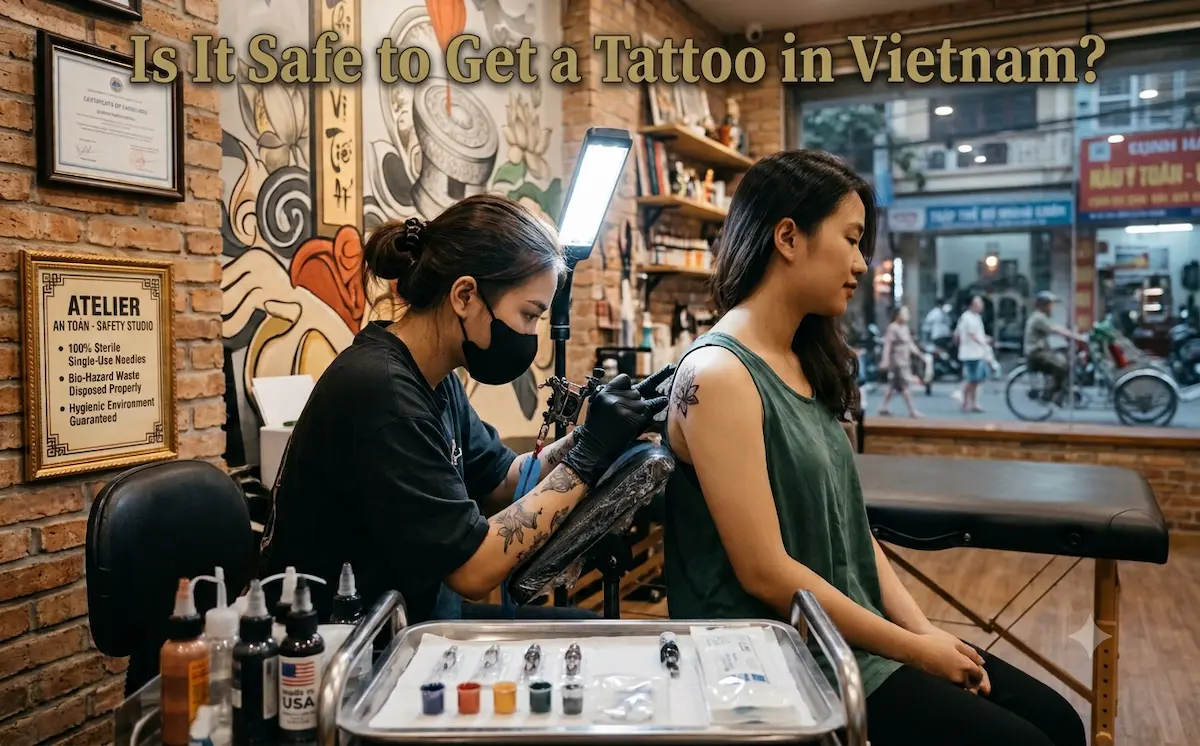
Every year, travelers arrive in Vietnam with a design in their camera roll and one nagging question: is it safe to get a tattoo in Vietnam?
The honest answer is yes, when you choose the right studio. Vietnam has a talented, fast-growing tattoo community, and many artists work to the same sterile standards you would expect in London, Los Angeles, or Tokyo. But quality and safety practices vary from studio to studio, in Vietnam as in every country. The difference between a great experience and a regrettable one usually comes down to what you check before you sit down.
This guide explains what a safe tattoo session looks like, which red flags to avoid, and how to protect your healing tattoo in a tropical climate.
Why Safety Matters More Than Style
A tattoo works by using needles to deposit ink into the dermis, which means it is a procedure that breaks the skin. If equipment is not sterile or hygiene practices are poor, the risks include:
- Local skin infections, which can cause redness, swelling, pus, and scarring
- Bloodborne infections, such as hepatitis B, hepatitis C, and HIV, spread through contaminated equipment
- Allergic reactions to low-quality or unregulated pigments
- Poor healing, causing patchy ink, scarring, or distorted lines
These risks are preventable. Professional studios follow strict protocols precisely because the stakes are real.
The Safety Checklist: What a Professional Studio Does
Before you book, make sure the studio meets every point below. A good artist welcomes these questions.
Needles and Equipment
- Needles and cartridges are single-use and sealed. You should see them opened from sterile packaging in front of you.
- Used needles go straight into a sharps container, never reused or left out.
- Machines, clip cords, and power cables are covered with disposable barrier protection.
- Reusable equipment is properly sterilized, typically with an autoclave and not just a wipe-down.
Ink and Supplies
- Ink is poured into disposable caps for each client, never shared or reused.
- Pigments come from reputable manufacturers. Ask which brands the artist uses. Professionals are happy to tell you.
- Single-use supplies such as razors, wipes, and ointment applicators are used and discarded per client.
The Artist and the Workspace
- Hands are washed and fresh gloves are put on before the session and whenever gloves touch anything non-sterile.
- The skin is cleaned and prepared before the stencil is applied.
- The workstation is wiped with disinfectant and set up with fresh barriers for every client.
- The workspace is clean and dedicated, not shared with food, retail clutter, or general foot traffic.
Red Flags to Walk Away From
Trust your eyes and your instincts. Leave if you notice:
- Needles that are unsealed, already opened, or look reused
- An artist who skips gloves or handles things after touching their phone or face
- Dirty or cluttered stations, or equipment without barrier protection
- Vague or defensive answers about sterilization and ink
- A price so low it seems impossible, since sterile materials and quality pigment cost money
- Pressure to start immediately without a consultation
If something feels wrong, you can always say no. A professional will respect that.
How to Research a Studio Before You Arrive
You can evaluate a studio long before you land in Hanoi.
- Review the portfolio, especially healed photos. Fresh tattoos can look perfect, while healed work shows true skill and hygiene.
- Read recent reviews and look for mentions of cleanliness, communication, and aftercare.
- Message the studio and ask about needles, ink brands, and aftercare. A clear, confident reply is a good sign.
- Ask for a consultation before booking. It is a chance to observe the studio’s professionalism firsthand.
Regulations and licensing requirements can differ between countries and regions, and enforcement is not uniform anywhere. So don’t rely on a license or certificate on the wall alone. What you can observe, and what the studio is willing to explain, is the better test.
Health Considerations Before You Get Tattooed
A few precautions protect both you and your result:
- Eat a proper meal and stay hydrated before your session.
- Avoid alcohol beforehand, since it can thin the blood and increase bleeding.
- Tell your artist about medical conditions, allergies, skin sensitivities, or medications. Conditions affecting healing or clotting, and some skin disorders, may call for advice from your doctor first.
- Avoid sunburned or irritated skin. Do not get tattooed over fresh sun damage.
- Think twice before tattooing right before a long flight, a beach trip, or intensive activity. Healing skin needs rest and protection.
If you have any health concerns, consult your doctor before your trip.
Aftercare in Vietnam’s Tropical Climate
Hanoi can be hot and humid for much of the year, and that affects healing. A safe session is only half the story. Good aftercare protects your investment.
General Healing Timeline
- Days 1–3: The skin is tender and slightly red, and may seep plasma and ink.
- Days 4–14: Peeling and itching begin. Do not pick or scratch.
- Weeks 2–4: The surface looks healed, though the tattoo may appear cloudy.
- Up to 3 months: Deeper layers settle and the final look emerges.
Practical Tips for Hot, Humid Weather
- Wash gently with mild, fragrance-free soap and pat dry with a clean paper towel.
- Apply a thin layer of the ointment or lotion your artist recommends. Do not overapply, since heavy layers trap sweat and heat.
- Wear loose, breathable, clean clothing over the tattoo to limit friction and sweat.
- Avoid swimming pools, the sea, baths, and saunas while healing.
- Stay out of direct sun. After healing, apply sunscreen daily.
- Watch for warning signs, such as spreading redness, increasing pain, swelling, heat, pus, or fever. If these appear, see a doctor promptly.
Is Tattooing Safe for Travelers Specifically?
Yes, with some planning. Travelers should:
- Book early in the trip to leave time for healing and for any touch-up.
- Allow time to rest. Avoid intensive activities, long hot treks, and swimming right after your session.
- Keep your artist’s contact details in case you have questions while healing.
- Carry your aftercare instructions in written form or as a saved message.
Your Next Step: A Safe, Custom Tattoo in the Heart of the Old Quarter
So, is it safe to get a tattoo in Vietnam? Absolutely, when hygiene, skill, and honesty come first. At Mr Tattoo Hanoi Studio, located in the center of Hanoi’s Old Quarter, those principles guide every session. We design each piece as a custom tattoo with you and follow strict hygiene standards, including single-use sterile needles and protected workstations. We also provide clear aftercare guidance suited to Hanoi’s climate.
Whether you want fine-line elegance, bold traditional imagery, or a design inspired by Vietnamese culture, our team will walk you through every step, and every question is welcome.
Have questions about safety or your design? Talk to us directly:
- WhatsApp / Hotline: +84 377 616 886
- Website: mrtattoo.vn
- Book a consultation: mrtattoo.vn/contact/
Visitors and locals are equally welcome. Message us on WhatsApp or visit the studio, and let’s create something beautiful and safe, worth keeping for life.