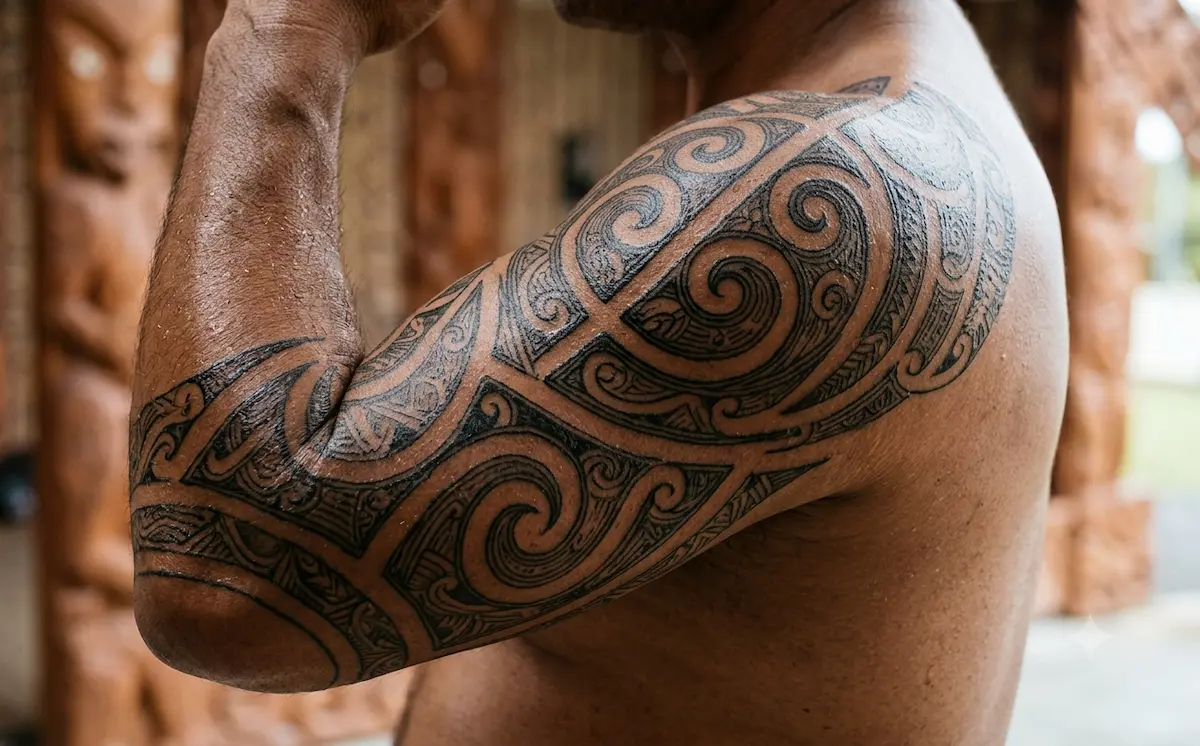
Few tattoo traditions carry as much weight as Māori tattoo, known in the Māori language as tā moko. A moko is not decoration. Traditionally, it is a visual record of a person’s ancestry, status, and place in the community, worn on the skin like a living genealogy. Anyone drawn to the bold spirals and flowing curves of Māori-inspired art should first understand what these designs mean and who they belong to.
This guide covers the history of tā moko, how it is traditionally and now made, how to care for a tattoo of this kind, and how to approach the style with respect.
What Is Tā Moko?
Tā moko is the traditional tattooing practice of the Māori, the Indigenous Polynesian people of Aotearoa (New Zealand). Each moko is unique to its wearer. Its patterns encode whakapapa (genealogy and lineage), tribal affiliation, achievements, and personal identity.
Several terms are worth knowing:
- Moko: The tattoo itself, and the broader art form.
- Tā moko: The act and practice of tattooing in the Māori tradition.
- Moko kauae: The chin moko worn by women, often marking lineage and standing.
- Kirituhi: Māori-style designs created for people without Māori ancestry. The word means “skin art,” and it differs from tā moko in an important way (see below).
- Mana: Spiritual authority and prestige, which a moko is understood to carry.
A Brief History of Māori Tattooing
Tattooing arrived in New Zealand with the Polynesian voyagers who settled the islands centuries ago. Over time, Māori developed a distinctive form: rather than simple pricked lines, tā moko was carved into the skin, leaving grooved, textured patterns that set it apart from most other Polynesian tattooing.
In traditional society, moko marked life transitions and social standing. Men commonly wore facial moko, and some also wore designs on the buttocks and thighs. Women traditionally wore moko kauae on the chin and sometimes the lips. Skilled practitioners, known as tohunga tā moko, were highly respected, and the process involved ritual and protocol.
Colonisation brought serious disruption. European contact, missionary influence, and later legal and social pressure contributed to a sharp decline in the practice. A 19th-century trade in preserved tattooed heads also left a painful legacy that Māori communities continue to address today. From the late 20th century onward, however, a strong cultural revival has restored tā moko, with many Māori, especially women reclaiming moko kauae, wearing it as a statement of identity and continuity.
How Tā Moko Is Made
Traditional Method: The Uhi
Traditionally, tā moko was done with uhi, small chisels often made from bone (such as albatross bone) and attached to a handle. The artist tapped the chisel into the skin to cut fine grooves, then worked pigment into them. The pigment was historically made from burnt natural materials, including soot from burnt kauri gum or plant matter.
The result was a distinctive textured, ridged surface, different from the smooth finish of a machine tattoo. Some contemporary Māori artists still practise this method, often within cultural protocol.
Modern Method
Many Māori artists today use tattoo machines, either alone or alongside uhi, reflecting the same continuity of tradition with contemporary tools. Whatever the tool, a skilled practitioner relies on:
- Deep knowledge of motif and meaning, so each element is placed correctly
- Controlled linework for the flowing curves and spirals
- Solid black saturation, since the style relies on strong, dense blackwork
- Careful composition that follows the contours of the body and face
The Visual Language of Moko
Several design elements recur in Māori art, though their meanings depend on context and the wearer’s own story:
- Koru: A spiral based on the unfurling fern frond, associated with new life and growth.
- Manaia: A stylised figure, often seen as a spiritual guardian.
- Hei tiki: A carved pendant form, which can appear in designs.
- Spirals and scrolls (pākati and rauponga patterns): Used in many compositions.
These are not interchangeable symbols to mix and match. In true tā moko, the design is created specifically for the person and their lineage. Copying motifs without that context risks stripping them of meaning.
Tā Moko vs. Kirituhi: Understanding the Difference
This distinction matters for anyone outside the Māori community.
Tā moko is a cultural right tied to Māori identity and whakapapa. It is traditionally intended for people of Māori descent, and the design tells that person’s story.
Kirituhi is the answer for people without Māori ancestry who appreciate the art form. It is a design created by a Māori artist, reflecting Māori artistic style and the wearer’s own story, without claiming whakapapa that the wearer does not have.
If you are not Māori and want a Māori-style piece, the respectful path is to seek a Māori artist and ask about kirituhi, rather than commissioning copied tā moko elsewhere. Many Māori voices have spoken against non-Māori wearing tā moko or imitating it casually.
Aftercare and Healing
Dense blackwork involves significant skin trauma, so careful healing matters. Individual experiences vary, but most tattoos follow a similar timeline.
Days 1-3: Initial Healing
The skin is tender, warm, and may weep plasma and ink. Follow your artist’s bandage instructions and keep the area clean.
Days 4-14: Peeling and Itching
Flaking and itching appear as the surface renews. Wash gently with mild, fragrance-free soap, pat dry, and apply a thin layer of recommended aftercare product. Never scratch or pick.
Weeks 2-4: Surface Recovery
The top layer closes, though the tattoo may look slightly dull while deeper layers finish healing.
Months 2-3: Deeper Settling
The final appearance emerges as the skin settles.
Key aftercare principles:
- Avoid soaking (pools, baths, sea) and direct sun while healing.
- Wear loose, clean clothing over the area.
- Use thin layers of moisturiser; too much can slow healing.
- Contact your artist if you notice persistent redness, swelling, heat, or unusual discharge.
Touch-Ups
Large solid black areas sometimes heal with small light patches. A touch-up after about 6-8 weeks, once the skin is fully healed, can even out saturation.
Hygiene and Safety Standards
Whatever the style, a professional studio should provide:
- Single-use, sterile needles and tubes, opened in front of you
- Disposable gloves, barrier protection, and sanitised workstations
- Reputable, properly labelled pigments
- Autoclave sterilisation for any reusable equipment
- A clear consultation and health screening before the session
Choosing the Right Artist
For authentic tā moko or kirituhi, look for Māori artists who work within the tradition and can speak to the meaning of each element. For any other Polynesian-inspired or blackwork style, choose an artist who is open about their influences and willing to discuss cultural context.
Your Custom Tattoo in Hanoi
Mr Tattoo Hanoi Studio is not a Māori studio, and we do not offer tā moko. Doing so would not be right. What we can offer is custom-designed tattoo art in the heart of Hanoi’s Old Quarter, where every piece is drawn for you rather than copied from a template. If bold blackwork, flowing curves, or Polynesian-inspired aesthetics appeal to you, our artists can create an original design that draws on your own story and avoids borrowing sacred symbols. If you are seeking true tā moko or kirituhi, we are happy to talk it through and encourage you to approach a Māori artist.
With strict hygiene standards and a refined artistic eye, our team guides you from first sketch to final aftercare, whether you are visiting Vietnam or live here.
Ready to start the conversation?
- WhatsApp / Hotline: +84 377 616 886
- Website: mrtattoo.vn
- Book a consultation: mrtattoo.vn/contact
Message us, share your idea, and let’s design something meaningful, original, and respectful.