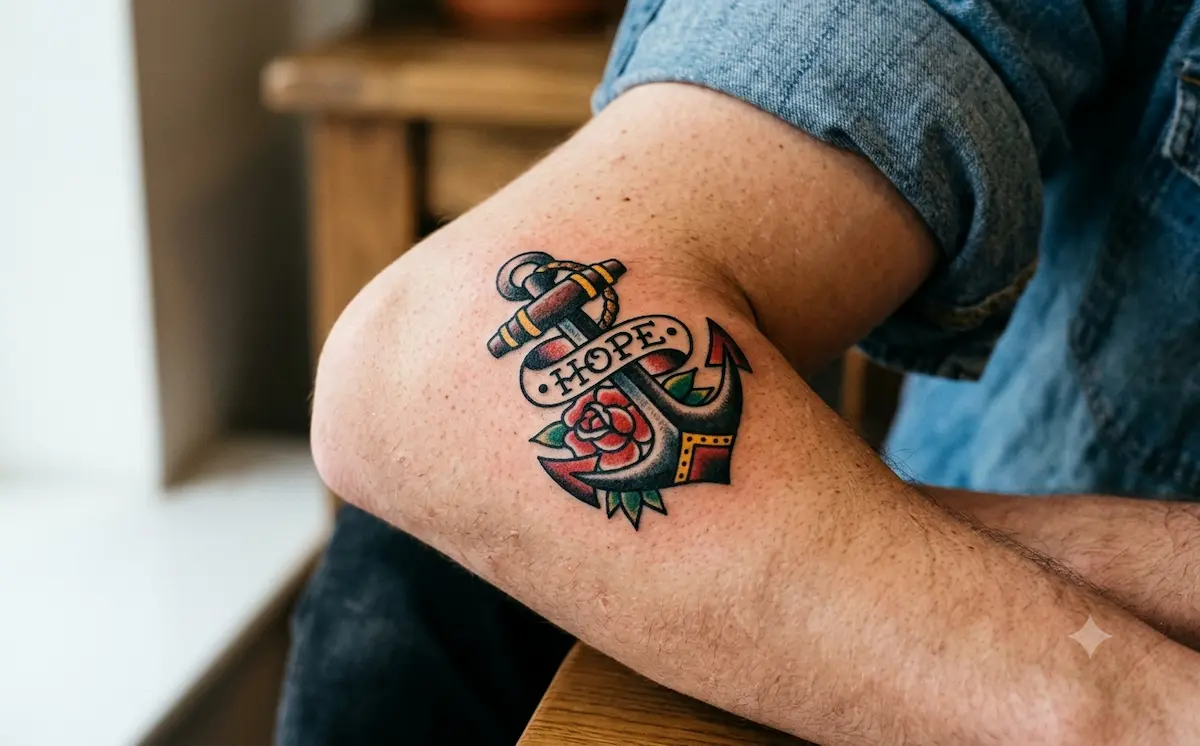
A swallow in flight, a dagger through a rose, an anchor wrapped in rope. These images have been inked onto skin for over a century, and they still turn heads on every continent. Old school tattoos are the foundation on which much of modern Western tattooing was built, and their appeal is simple: bold lines, saturated colour, and designs so readable you can recognise them from across a room.
This guide explores where the style came from, how it is made, why it ages so well, and how to care for it properly.
What Is an Old School Tattoo?
An old school tattoo, also known as American traditional or simply traditional, is defined by a handful of unmistakable features:
- Thick, confident black outlines that hold the design together
- A limited colour palette, classically red, green, yellow, and black, with occasional blue or brown
- Minimal, solid shading rather than soft gradients
- Iconic, symbolic imagery drawn from a shared visual vocabulary
Where fine line work whispers, old school tattooing speaks plainly. The style is built on clarity and durability, and every design choice serves those two goals.
A Brief History: From Sailors to Studios
The roots of old school tattooing lie in maritime culture. Sailors returning from voyages across the Pacific and Asia brought home tattoos and the techniques behind them, and ports became early hubs for the craft. Designs such as anchors, ships, swallows, and pin-ups served as talismans, travel records, and markers of belonging.
Several figures shaped the style as we know it today:
- Samuel O’Reilly, a New York tattooer who patented an electric tattoo machine in 1891, helped make tattooing faster and more consistent.
- Charlie Wagner, who worked in the same city, continued that tradition of machine-based tattooing.
- Norman “Sailor Jerry” Collins, working in Honolulu in the mid-20th century, blended American imagery with Japanese influence and refined the bold, graphic look many people picture today.
- Don Ed Hardy and other tattooers of the 1970s onward helped bring the style into the fine-art conversation and connected Western tattooing with Japanese traditions.
The result was a visual language that has been revived, reinterpreted, and celebrated by each new generation.
Iconic Old School Motifs
Classic flash (pre-drawn designs displayed on studio walls) established a core set of images, each with its own traditional symbolism:
- Swallows: Often associated with safe return from sea
- Anchors: Stability and steadfastness
- Roses: Love, beauty, and passion
- Daggers and skulls: Courage and the passing of time
- Eagles and panthers: Strength and power
- Pin-up figures and ships: Nostalgia, adventure, and romance
Meanings vary between wearers and tattooers, so treat these as traditional associations rather than fixed rules.
How Old School Tattoos Are Made
Needles and Machines
Old school work relies on two main needle types:
| Needle Type | Typical Use |
|---|---|
| Round liner (RL), often 7RL to 14RL | Bold, solid outlines |
| Magnum (M1) or round shader groupings | Packing colour and solid shading |
Artists use both coil machines and modern rotary machines. Coil machines are valued by many traditionalists for their punchy, consistent hit, while rotaries offer lighter weight and smooth operation. The choice often comes down to the artist’s habits and the demands of the design.
The Craft Behind the Boldness
Bold does not mean simple. A strong old school tattoo depends on:
- Consistent line weight: Smooth, even outlines without wobbles or gaps
- Solid colour saturation: Packed evenly so colours look rich and opaque
- Clean composition: Balanced shapes, deliberate spacing, and clear focal points
- Appropriate depth: Deep enough for lasting pigment retention without trauma to the skin
Because the style leaves no room for hiding mistakes, technical discipline is essential.
Why Old School Tattoos Age So Well
One of the style’s greatest strengths is longevity. The reason is design logic: thick outlines act as a container for the colour, so even as pigment softens over decades, the image stays readable. Fine detail and subtle gradients are more vulnerable to blur, while bold shapes retain their structure.
To help your tattoo age gracefully:
- Choose bold, readable designs with adequate spacing between elements.
- Pick placement wisely. Upper arms, forearms, calves, and thighs are stable areas that hold ink well.
- Protect healed skin from the sun. Daily SPF is the most effective long-term habit, especially for colour.
- Plan for occasional refreshing. Over many years, a touch-up can restore vibrancy.
Scientific Aftercare and Healing Stages
Large areas of saturated colour mean more skin trauma than a delicate outline, so careful aftercare matters. Individual healing varies, but most tattoos follow a similar timeline.
Days 1-3: Initial Healing
The skin will be tender, warm, and may weep plasma and excess ink. Follow your artist’s bandage instructions and keep the area clean.
Days 4-14: Peeling and Itching
Flaking and itching appear as the surface renews. Wash gently with mild, fragrance-free soap, pat dry, and apply a thin layer of recommended aftercare product. Do not scratch or pick.
Weeks 2-4: Surface Recovery
The top layer closes, though the tattoo may look slightly dull or cloudy as deeper layers finish healing.
Months 2-3: Deeper Settling
Colours settle and the final appearance emerges.
Key aftercare principles:
- Avoid soaking (pools, baths, sea) and direct sun while healing.
- Wear loose, clean clothing over the area.
- Use thin layers of moisturiser; too much can slow healing.
- Contact your artist if you notice persistent redness, swelling, heat, or unusual discharge.
Touch-Ups
Solid colour sometimes heals with small light patches. A touch-up after about 6-8 weeks, once the skin has fully healed, can even out saturation and sharpen outlines.
Hygiene and Safety Standards
Packing colour and bold outlines involves significant needle work, so strict hygiene is non-negotiable. A professional studio should provide:
- Single-use, sterile needles and tubes, opened in front of you
- Disposable gloves, barrier protection, and sanitised workstations
- Reputable, properly labelled pigments, especially for reds and yellows
- Autoclave sterilisation for any reusable equipment
- A clear consultation and health screening before the session
If a studio cannot explain its protocols, choose another.
Choosing the Right Old School Artist
Look for a portfolio of healed work showing even outlines, solid colour, and clean composition. Ask whether the artist designs custom pieces in the traditional idiom, since a great old school tattoo is not just copied flash but a thoughtful adaptation of the style to your idea and your body.
Your Old School Tattoo in Hanoi
If you are ready to wear a bold classic, Mr Tattoo Hanoi Studio welcomes you in the heart of Hanoi’s Old Quarter. We specialise in custom-designed tattoos, where every piece is drawn for you, honouring the traditional visual language while making it personal. With strict hygiene standards and a strong artistic eye, our team guides you from first sketch to final aftercare, whether you are visiting the city or call it home.
Ready to begin?
- WhatsApp / Hotline: +84 377 616 886
- Website: mrtattoo.vn
- Book a consultation: mrtattoo.vn/contact
Message us, share your idea, and let’s create something bold, timeless, and unmistakably yours.